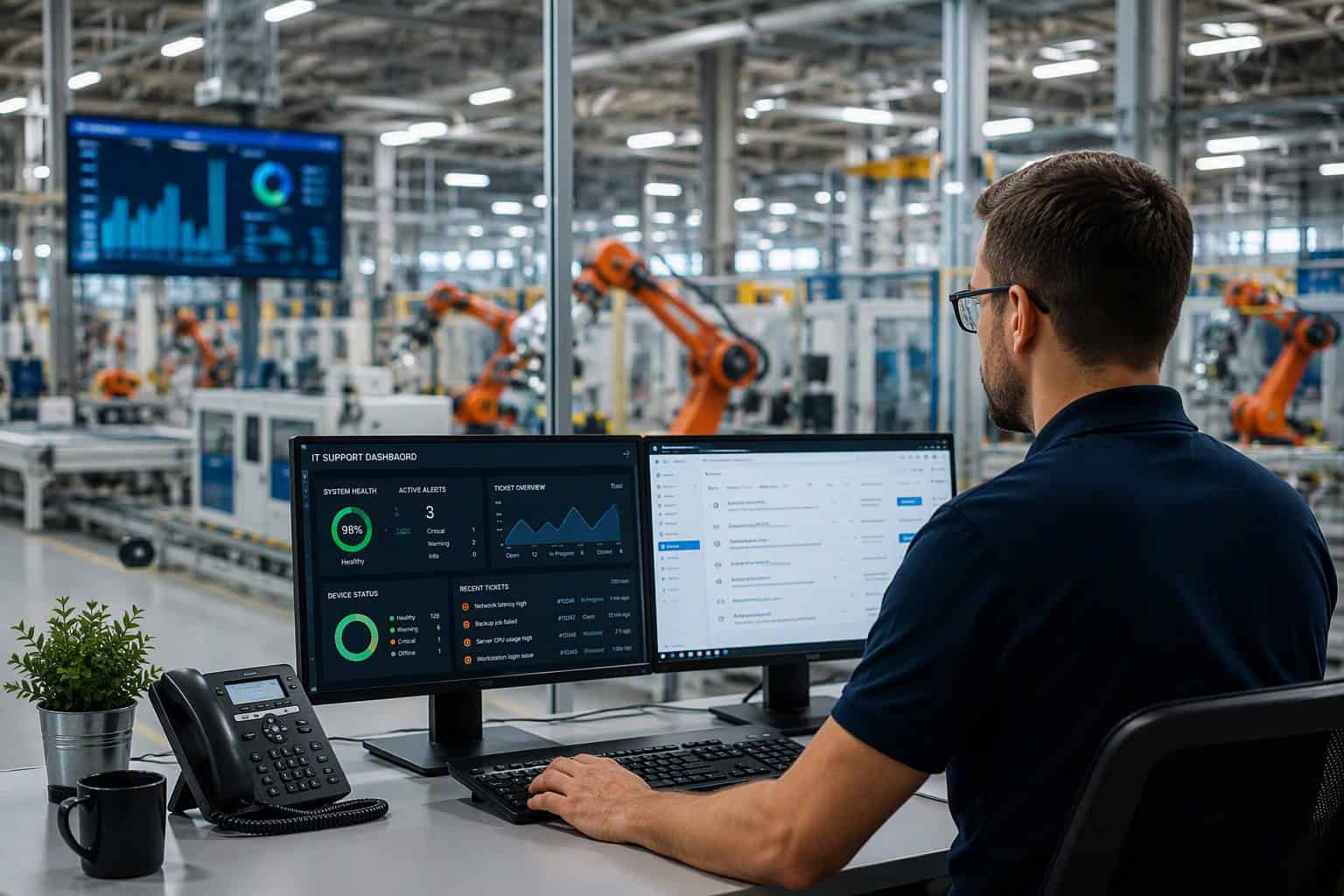
In today’s IT support landscape, strong technical ability is expected. Customers want issues resolved quickly, systems kept stable, and engineers who know their craft. But that’s the baseline.
Increasingly, organisations also expect their IT provider to be proactive, communicate clearly, and deliver a service that supports wider business objectives.
And what increasingly sets one IT support provider apart from another is how customers experience the service while those issues are being resolved.
Modern IT support isn’t just about closing tickets. It’s about reducing disruption, building confidence, communicating clearly and helping organisations feel reassured that their technology is supporting productivity, resilience and long-term business success.
That’s why customer experience is becoming one of the strongest competitive advantages in managed IT services, and is a focus of Akita’s operations
Fixing The Issue Isn’t The Whole Story
For years, IT support has been measured through operational metrics such as response times, resolution times, ticket volumes and SLAs. These measures still matter, but they don’t always show how the service actually felt to the customer.
But a ticket can meet every SLA target and still leave someone frustrated. Updates may have been unclear. The customer may have had to chase for information or repeat themselves. They may not have known what was happening or when things would improve. On paper, the ticket looks successful. In reality, the experience may not have been.
Equally, resolving an incident quickly is only part of delivering a high-quality service. Organisations increasingly value providers that identify recurring issues, recommend improvements and help reduce the likelihood of future disruption.
This gap between operational performance and lived experience is something many organisations now recognise. Experience-led approaches, such as Experience Level Agreements (XLAs), place greater emphasis on outcomes, perceived quality and trust, not just internal targets.
From a customer’s point of view, success isn’t only that the issue was fixed. It’s how easy the process felt, how well they were supported, whether they felt someone truly took ownership, and whether they were left in a stronger position than before.
The Service Desk Is Becoming A Value Driver
Among the better IT partners, service desk operations are changing. Rather than being purely reactive, modern service desks are increasingly proactive and insight-led, using monitoring, service data and customer feedback to identify trends, prevent avoidable issues and continually improve the customer experience.
This shift is important because IT now underpins almost every part of a business. When systems are unreliable, productivity suffers. When support feels disjointed, confidence drops. And when communication is unclear, frustration builds quickly.
Strong IT support doesn’t just resolve incidents. It helps minimise disruption, improve productivity, support informed decision-making and give organisations confidence that their technology will enable rather than hinder business performance.
Experience Is Defined in the Moments That Matter
Customer experience in IT support is often shaped during moments of pressure:
- A critical system goes down.
- A key application stops working.
- A security concern is raised.
- A major incident affects multiple users.
- A project doesn’t go to plan.
In these moments, customers need more than technical action. They need confidence that their provider understands both the technical issue and its wider business impact.
They need reassurance, clarity and a sense of ownership. They want to know:
- Has the impact been understood?
- Is this being taken seriously?
- Will I be kept informed?
- Do I know what happens next?
- Can I trust this provider to manage the situation?
Communication plays a huge role here. Customers are often far more understanding of complex technical issues when they feel informed and supported. Silence, vague updates or unclear responsibility can quickly turn a manageable issue into dissatisfaction.
Customer experience isn’t a “soft” element of service. It’s an integral part of how quality is judged.
From SLAs To Experience-Led Measures
Service Level Agreements are still important. They help set expectations and give structure to service delivery. But on their own, they don’t always reflect how customers perceive the service. That’s where Experience Level Agreements (XLAs) come in.
XLAs add an experience-focused layer, measuring how customers feel about the service they received, not just whether a target was met.
For example:
- Was the ticket resolved on time — and did the customer feel supported?
- Did the response meet a target — and did the customer understand what was happening?
- Were tickets closed efficiently — and was the underlying issue addressed?
- Was the process followed — and did it feel clear and confidence-building?
This broader view helps IT providers understand what customers truly value, rather than relying solely on internal operational metrics.
Why Experience Data Matters
One of the biggest benefits of focusing on customer experience is better insight.
Feedback, CSAT scores, NPS, complaint themes and recurring issues all help highlight what’s working and where improvement is needed.
Operational data might show targets are being met, while experience data can reveal communication gaps, friction between teams or frustration with processes.
Combined with service reviews and trend analysis, these insights help organisations move beyond reactive support towards continual service improvement.
By using experience data alongside traditional metrics, IT teams can move from assumption to evidence and focus improvement efforts where they will have the greatest impact on customers.
AI Makes The Human Side More Important
AI and automation are transforming IT support by helping service desks identify patterns, prioritise incidents, automate routine tasks and improve response times. Used effectively, they enhance operational efficiency while allowing engineers to focus on more complex or business-critical issues.
But automation doesn’t remove the need for human accountability.
When an issue is urgent, business-critical or stressful, customers still want a person who understands the situation, applies judgement and takes ownership.
The strongest IT support providers use technology to remove unnecessary effort while strengthening, rather than replacing, the human relationships that build trust and long-term partnerships. The real advantage comes from combining technology with expertise, communication and genuine care for the customer experience.
Experience Builds Trust — and Long-Term Value
In managed IT services, trust is everything.
Customers aren’t simply buying technical expertise. They’re investing in a long-term technology partner that helps maintain operational stability, reduce risk and support future growth.
When the experience consistently feels positive, customers are more likely to stay, engage and see their provider as a trusted partner rather than just a supplier.
Customer experience supports retention, stronger relationships and long-term value, not as a separate initiative, but as part of everyday service delivery.
What Modern IT Support Should Feel Like
Modern IT support should feel joined-up, proactive and human.
Customers shouldn’t have to chase for updates, repeat themselves, or wonder who’s responsible for their issue.
A strong support experience includes:
- Clear ownership from the start
- Proactive monitoring and early identification of issues
- Regular, meaningful communication
- Fast escalation when needed
- Engineers who understand business impact, not just technical detail
- Feedback that drives continual service improvement
- Data that measures customer experience alongside operational performance
This is the direction IT support is moving in.
The Competitive Advantage
Customer experience is becoming a competitive advantage because it’s difficult to replicate.
Many providers can offer similar technologies and technical capabilities. Far fewer consistently combine operational excellence, proactive service management and a customer experience that builds confidence over the long term. That experience is shaped by culture, communication, leadership and a genuine commitment to continual improvement.
The future of IT support isn’t just about resolving tickets. It’s about helping organisations remain productive, resilient and confident that their technology is being actively managed. Providers that combine technical excellence with proactive service, clear communication and a consistently positive customer experience will be best placed to build lasting partnerships and deliver long-term business value.
Akita is an award-winning IT support provider dedicated to delivering a proactive and customer-focused service. For more information please get in touch today:
Contact Us