
DISASTER RECOVERY SERVICES
Effective business continuity solutions are vital for all organisations of all sizes.
Build Resilience Into Your IT With Our Recovery Solutions & Consultancy
From natural disasters like floods, fires, and earthquakes, to attacks and power outages, unexpected events can cause chaos for your business. But you can prepare with the help of Akita’s IT disaster recovery services.
Akita’s team of cyber security consultants works with organisations to implement effective disaster recovery planning to minimize downtime and quickly get back to business as usual.
We work with you to identify potential risks and vulnerabilities, develop disaster recovery plans and implement the IT solutions needed to ensure business continuity. We can even test and refine your plan over time to ensure maximum preparedness.
Whether you require disaster recovery consultancy, Disaster Recovery as a Service (DRaaS), cloud-based resilience or a complete business continuity strategy, our specialists can help you build an approach that matches your operational and compliance requirements.
Contact us today to learn more about our disaster planning and recovery services and how we can help protect your business from the impact of a disaster:

90%
Of businesses fail if they don't reopen quickly after a disaster
DISASTER RECOVERY Planning
THE THREAT LANDSCAPE
Disaster recovery is usually considered for protecting against a catastrophic event. Fire, floods and natural disasters are what usually come to mind.
While plans do need to be made for these threats, there are other threats that can hurt businesses just as badly. These include:
- Theft of IT hardware
- Server and IT hardware failure
- Hacking
- Malicious activity by employees
- Interruption of internet connectivity
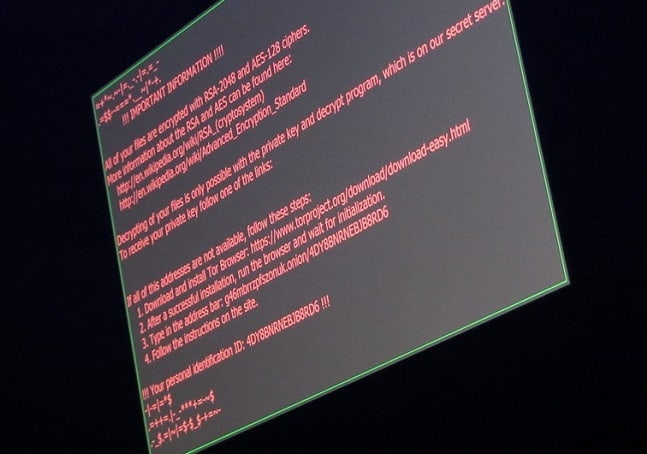
And then there are viruses and malware. In the age of ransomware, an entire server, with all of your oprganisation’s key data, can be rendered useless in minutes.
Organisations must also consider risks such as cloud service outages, accidental data deletion, software vulnerabilities, third-party supplier failures and increasingly sophisticated ransomware attacks. An effective disaster recovery strategy prepares your organisation for both physical and digital threats.
IT Disaster Recovery London & UK
THE BUSINESS IMPACT OF DATA LOSS
The effect of losing business data is serious; over half of all businesses that experience major data loss close within two years.
Then there’s the GDPR dimension to consider. Organisations that lose personal data (through hacking or a malware attack, for example) are in breach of the regulation. Any breach must be reported to the ICO, and should they judge that data loss is through negligence, can lead to fines.
In some industries, having an effective disaster recovery plan is also a regulatory requirement. Companies that are found lacking can incur fines.
Often more damaging though is the impact on company reputation. Businesses can find it difficult to trade and attract new business. The cost of winning back customer trust may exceed the cost of recovery by some magnitude.
A successful disaster recovery plan focuses on more than recovering data. It should enable your organisation to restore critical applications, communications and business operations within clearly defined Recovery Time Objectives (RTOs) and Recovery Point Objectives (RPOs).
These measures determine how quickly systems must be restored and how much data loss is considered acceptable, helping organisations make informed investment decisions around resilience.

What Is Disaster Recovery?
Disaster recovery is the process of restoring IT systems, business applications and data following an unexpected disruption.
The objective is to minimise downtime, protect critical information and restore normal business operations as quickly as possible.
An effective disaster recovery strategy combines people, documented processes and technology. This can include secure cloud backups, server replication, failover systems, cyber security controls and regular disaster recovery testing to ensure your organisation can recover when it matters most.

Disaster Recovery vs Backup
Backup and disaster recovery are often considered interchangeable. And while closely related, each serves different purposes.
Backups protect copies of your data, while disaster recovery focuses on restoring your entire IT environment, including servers, applications, communications and user access.
Without a disaster recovery plan, organisations may have access to backed-up data but still face lengthy operational downtime while systems are rebuilt.
IT Disaster Recovery Services London & UK
Our BUSINESS CONTINUITY SERVICES
Our principle disaster recovery service is our consultancy, either responding to an event or mitigating risks for an organisation. This is delivered principally by our team of expert cyber security consultants, but also drawing upon Akita’s wider areas of expertise including IT infrastructure, cloud, Microsoft 365 and more.
Alongside this, Akita offers a wide range of IT services designed to enhance disaster recovery plans. These include:


Hosted Desktops
Running your organisation’s desktops from a cloud environment increases flexibility and security. If a PC is stolen or destroyed, all data is held within the cloud so staff can access their work from another PC or device.
View
Hosted VoIP
A hosted 3CX VoIP phone system can allow for all your business’ calls to be run from staff mobile phones should your office phones be rendered out of action.
View
Backup Internet Connection
Internet outage can be costly for a business. Our 4G backup solution can support IT systems, Wi-Fi and VoIP phones if your main line drops. And as it runs on 4G, it’s far less susceptible to infrastructure damage that can take down other backup solutions.
ViewOur disaster recovery solutions can be delivered as standalone services or combined into a complete resilience strategy tailored to your organisation. We work with businesses across London and the UK to protect on-premises, hybrid and cloud-based environments.
Disaster Recovery Solutions London & UK
Why Organisations Need A Disaster Recovery Plan
‘Fail to plan, plan to fail’. So alongside disaster recovery services, our cyber security consultants can provide comprehensive disaster recovery planning services.
We understand the importance of protecting your business from disruptions and can assist you in creating a robust disaster recovery plan. Our consultants will conduct a security audit and vulnerability scanning to identify weak points in your IT networks and internal procedures. This then helps us develop effective mitigation strategies to address potential cyber threats and system failures.
We also recommend IT hardware and system improvements to minimize the risk of business disruption linked to natural disasters.
Additionally, our consultants can offer advice on staff training schemes and communication plans so that your users know exactly what to do should a disaster occur.

Our disaster recovery planning typically includes:
- Business impact analysis
- Identification of critical systems and services
- Risk assessment and vulnerability analysis
- Recovery Time Objective (RTO) and Recovery Point Objective (RPO) definition
- Backup and replication strategy
- Disaster recovery testing
- Incident response procedures
- Ongoing review and continuous improvement
Regular testing is particularly important. A disaster recovery plan that has never been tested may not perform as expected during a real incident. We help organisations validate recovery procedures through scheduled testing and continual refinement.

Experts In IT Resilience
As an experienced managed IT service provider, we’ve helped mid-market organisations across London and the South East of all sizes recover from a range of IT disasters.
With an in-house team of accredited cyber security consultants, we’re positioned to react quickly to any issue that you experience. Once the issue is contained, we’ll help you rebuild impacted IT systems as fast as possible – even introducing wider than can get you up and running faster.
Once stabilised, we’ll then deconstruct incidents to understand exactly how damage has occurred. We’ll then recommend the measures that can ensure you’re protected going forward.
As well as responding to incidents, our objective is to help organisations reduce the likelihood and impact of future disruption.
By combining cyber security expertise, Microsoft cloud technologies, resilient infrastructure and proactive monitoring, we help businesses build long-term operational resilience rather than simply recovering from individual events.
Disaster Recovery Frequently Asked Questions
What is the difference between backup and disaster recovery?
A backup service creates copies of your data, server or applications. Disaster recovery provides the framework to restore your IT services, applications and business operations following a disruption. Organisations require both.
How often should disaster recovery plans be tested?
We recommend reviewing and testing disaster recovery plans at least annually, after a merger or acquisition, or whenever significant changes are made to your IT infrastructure. Organisations operating in regulated sectors may require more frequent testing and Akita is happy to support this.
Does Microsoft 365 provide disaster recovery?
Microsoft provides resilience for its cloud platform, but organisations remain responsible for protecting their own business data and ensuring they can recover from accidental deletion, ransomware or user error. Akita offers additional backup and disaster recovery solutions for Microsoft 365 tenants - discover more:
MoreHow can Akita help after a cyber attack?
Akita's skilled cyber security consultants can assist with incident response, recovery, system rebuilding, improving governance and controls, and developing a stronger disaster recovery strategy to reduce the risk of future incidents. Get in touch for more information:
Get In Touch
IT Disaster Recovery Services London & South East
Ensure Your Security
For more information on business continuity solutions and IT disaster recovery services, please get in touch: