The IT managed services market is crowded. On paper, most IT MSPs appear to offer the same things: proactive monitoring, service levels, security tooling and support desks that promise fast response times.
Yet customers know the reality can feel very different. Some service desks become an enabler of growth and resilience. Others remain reactive, transactional – and arguably more frustrating to work with.
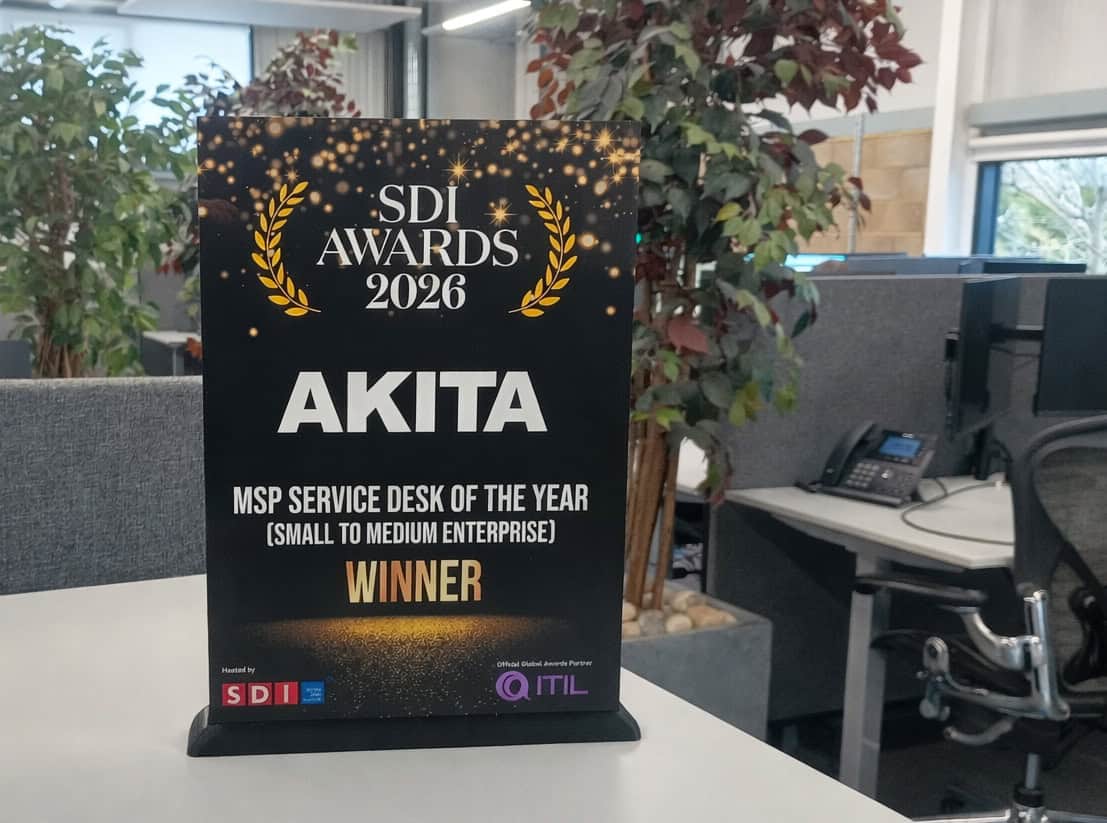
So, what sets award‑winning service desks (like Akita’s ) apart from the average IT MSP?
The answer lies not in tools alone, but in mindset, culture and outcomes. The very best service desks redefine what “support” means, moving from ticket resolution to genuine business impact.
From Fixing Problems – to Preventing Them
Average IT MSP service desks tend to focus on firefighting: success is measured by how quickly tickets are closed after something has gone wrong.
Akita takes a different view: the best ticket is the one that never needs raising.
Proactive monitoring, intelligent alerting and automated remediation are fundamental. Rather than waiting for users to experience disruption, leading service desks intercept issues early; patching vulnerabilities, resolving device faults and stabilising systems before productivity is affected. This shift reduces risk, minimises downtime and removes friction from users’ working lives.
Crucially, this preventative approach also changes the relationship with customers. IT stops being a source of interruption and becomes a trusted underpinning for everyday operations.
Exceptional People, Not Just Technical Skills
Technology enables great service desks, but people define them.
At Akita, we invest deeply in our team. That means structured onboarding, continuous skills assessments and training that keeps pace with evolving technologies. It also means understanding individual ambitions and aligning personal development with organisational capability.
Where the average IT MSP struggles with churn and burnout, service desks like Akita’s foster engagement and pride in service delivery. Engineers understand that they are not simply fixing machines – they are helping people succeed at work. Recognition programmes, peer feedback and transparent progression paths reinforce this mindset.
The result is consistency. Customers deal with engineers who are knowledgeable, motivated and empowered to take ownership, rather than overworked technicians rushing to hit volume targets.
Innovation That Simplifies, Not Complicates
Rather than layering complexity onto already busy environments, they integrate technology to remove friction. Intelligent automation handles repeatable maintenance tasks. Monitoring systems are refined and tailored, not generic. AI is introduced responsibly to assist engineers—surfacing insight, accelerating diagnosis and allowing human expertise to focus where it adds the most value.
This approach ensures technology enhances service rather than becoming a barrier. End users benefit from fewer disruptions, faster resolutions and more meaningful human interaction when it matters.
Innovation is frequently overused in IT marketing, but award‑winning service desks apply it with discipline.
True Responsiveness: Humans at the Point of Need
Response times are often quoted – but rarely explained.
Many IT MSPs meet SLAs by sending automated acknowledgements, leaving customers none the wiser about when real help will arrive.
Award‑winning service desks redefine responsiveness. When customers get in touch with Akita, they speak to skilled engineers who can resolve issues in real time wherever possible. Traditional gatekeeping is removed, allowing faster engagement and reducing back‑and‑forth escalation.
This human‑centred approach builds trust. Customers feel heard, supported and respected—especially during moments of urgency. Over time, that responsiveness becomes a defining aspect of the service desk’s value.
Moving Up the Value Stack
Strong operational support is the foundation, but leading service desks don’t stop there.
By analysing service data and understanding recurring patterns, our team feeds insight into broader strategic conversations. This intelligence informs account management, roadmap planning and investment decisions, helping customers align IT with business objectives.
Service desks operating at this level contribute to cost optimisation, scalability and resilience. They help customers avoid poor technology decisions, optimise licensing, improve security posture and plan for growth. In effect, the service desk becomes a strategic partner rather than a reactive support function.
Measuring What Matters
What you measure shapes how you behave.
Most IT MSPs focus heavily on SLA compliance. But we go deeper – tracking customer satisfaction and experience across the organisation, not just within IT.
Feedback is captured systematically and analysed through continual improvement frameworks that translate insight into action.
Dashboards replace anecdotal opinion with data. Trends are reviewed openly. Teams are accountable, and improvements are targeted, measurable and iterative. This disciplined approach drives long‑term consistency rather than short‑term fixes.
Longevity As Proof Of Value
One of the clearest indicators of an exceptional service desk is customer longevity. Long‑standing partnerships signal trust earned over years of dependable delivery, adaptation and shared progress.
Industry recognition, while valuable, is a by‑product rather than the goal. Awards reflect sustained commitment to quality, people and innovation – not isolated moments of success.
It validates what customers already know: that the service desk delivers value beyond expectations.
What Businesses Should Look For
For organisations evaluating IT MSPs, the difference between average and award‑winning service desks often becomes clear by asking a few key questions:
- Do they prevent issues or simply react to them?
- Are response times meaningful, with skilled engineers involved early?
- Can they demonstrate how service insight feeds into business outcomes?
- How do they invest in their people and measure customer experience?
The answers reveal whether a service desk is focused on transactions or transformation.
Conclusion
Award‑winning service desks like Akita’s do more than keep systems running. They enable people, protect productivity and align technology with ambition.
Through a combination of culture, innovation and strategic thinking, they move beyond the traditional break‑fix model and become a core contributor to business success.
In a market full of IT MSPs that look similar, the difference is clear: the best service desks are not measured by tickets closed, but by the strength, resilience and confidence of the businesses they support.
Interested in exploring how an award‑winning service desk works differently to other IT MSPs? Speak to our team today:
Contact Us