Cyber security is no longer just an IT concern. It has become a business continuity, production and supply chain issue that directly affects profitability, customer confidence and operational resilience. So says the latest ‘Cyber Security In Manufacturing’ report from the UK’s manufacturing industry body, Make UK.
For UK manufacturers investing in automation, connected systems, AI and digital transformation, the report highlights a growing challenge: digital technologies are helping organisations improve efficiency and productivity, but they are also increasing exposure to cyber threats that can disrupt production and impact the wider supply chain.
Manufacturing Faces A Unique Cyber Risk
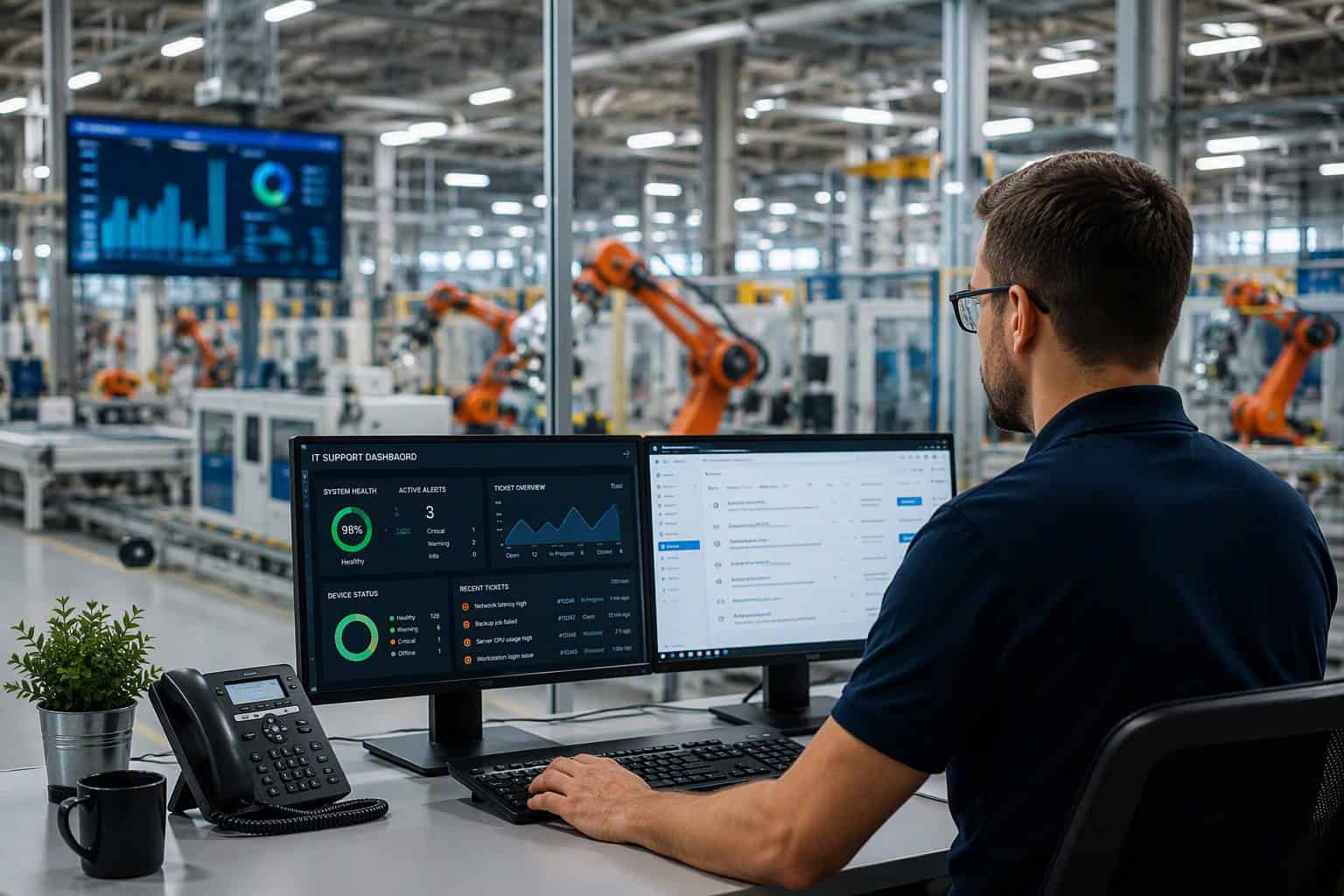
Unlike many other sectors, manufacturing environments sit at the intersection of IT and operational technology (OT). Modern factories rely on enterprise software, connected machinery, robotics, logistics systems and supplier networks working together seamlessly. When a cyber incident occurs, the consequences often extend beyond data loss and directly affect physical production.
The report notes that manufacturing organisations should no longer view cyber incidents as isolated technology problems. A successful attack can quickly become a production issue, a customer service issue and ultimately a financial issue. This convergence of IT and OT means cyber resilience must be treated as a core business requirement rather than a standalone security initiative.
Most Manufacturers Are Improving Their Defences
There are positive signs throughout the report. Seven in ten manufacturers avoided cyber incidents that affected operations during the previous year, suggesting many organisations are strengthening their cyber security posture and investing in resilience measures.
However, the risk remains significant. Nearly one in three manufacturers experienced a serious cyber incident either directly or through their supply chain. Of those affected, some were able to contain the impact through effective mitigation measures, while others suffered financial and operational consequences
The findings reinforce an important point: the question for manufacturers is no longer whether cyber threats exist. Instead, organisations must focus on how quickly they can identify weaknesses, respond to incidents and maintain production when disruption occurs.
Cyber Security Has Become A Commercial Requirement
One of the most interesting findings from the report is the growing commercial importance of cyber resilience in manufacturing. Organisations are increasingly being asked by customers to demonstrate their ability to protect data, avoid disruption and maintain reliable operations.
The report highlights that cyber resilience is now closely linked to operational costs and production uptime. Organisations that fail to demonstrate appropriate security controls may find it harder to win new business, satisfy customer requirements or participate in complex supply chains.
As supply chains become increasingly interconnected, customers want assurance that suppliers can continue operating even when faced with cyber threats. Cyber security is rapidly becoming part of the wider supplier assessment process.
Supply Chain Attacks Are A Growing Concern
One of the strongest messages from the report is the growing risk posed by supplier-related cyber incidents. Manufacturers may invest heavily in securing their own operations, yet still experience disruption arising from attacks elsewhere in the supply chain.
Among organisations affected by supplier cyber incidents, some of the most common consequences included delays to customer deliveries and reduced production capacity. Other impacts included supplier delivery delays, shortages of components and materials, logistics disruption and increased costs.
This demonstrates how a cyber incident affecting a single supplier can quickly create operational problems across multiple organisations. In today’s connected manufacturing ecosystem, cyber resilience extends well beyond the factory walls.
Governance Still Needs Improvement
While many manufacturers have adopted basic cyber security controls, the report identifies ongoing weaknesses in governance, accountability and preparedness.
According to the findings, just over half of organisations have formal incident response plans, while fewer than half have assigned senior-level ownership for cyber security. The report also highlights gaps relating to recovery testing and resilience planning.
These findings suggest that many organisations continue to focus primarily on prevention rather than recovery. Yet resilience depends not only on stopping attacks, but also on ensuring the business can recover quickly when incidents occur
Cyber Security In Manufacturing Should Enable Innovation
Importantly, the report argues that cyber resilience should not be viewed as a barrier to innovation. Instead, effective cyber security in manufacturing should provide the confidence needed to embrace automation, AI, connected manufacturing and other digital initiatives.
As manufacturers continue modernising their operations, they need a practical and proportionate approach to security that allows technology investments to deliver business value without introducing unacceptable risk. The report also calls for simpler cyber security frameworks and support mechanisms, particularly for SMEs that may struggle to navigate complex standards and compliance requirements.
What Manufacturers Should Do Next
The report concludes that cyber resilience must become a production priority. Manufacturers are encouraged to identify critical systems, understand supply chain dependencies, assign clear ownership of cyber risk and regularly test recovery plans.
For organisations pursuing digital transformation, the message is simple. Cyber security is no longer a technical discussion reserved for the IT department. It is a strategic business issue that affects productivity, customer satisfaction, operational continuity and long-term growth. Manufacturers that build resilience now will be better positioned to embrace future technologies with confidence while protecting the continuity of their operations.
If you’re assessing the cyber resilience of your manufacturing operation, Akita can help evaluate your current security posture, identify operational risks and develop a roadmap that supports both production continuity and future digital transformation. Get in touch for more:
Contact Us