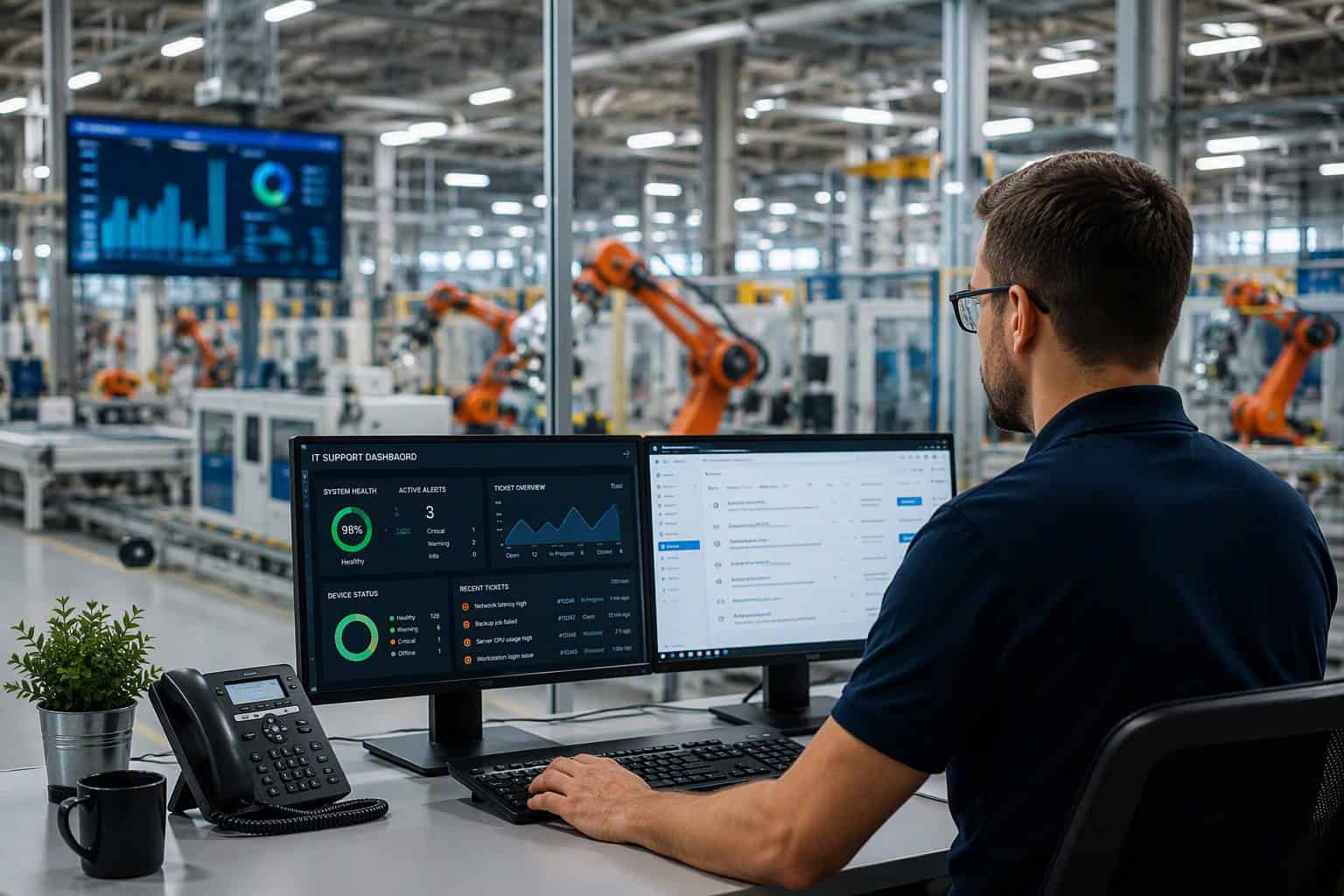
Cyber security in manufacturing is no longer just an IT concern. Manufacturers rely on data-driven operations, connected production equipment, cloud platforms and digital supply chains to maintain efficiency and competitiveness. As digital transformation accelerates across the sector, manufacturing cyber security has become a business-critical priority for organisations seeking to protect production systems, operational technology and business continuity.
While these technologies bring significant operational benefits, they also create new vulnerabilities. From ransomware attacks to intellectual property theft, the consequences of poor cyber security in manufacturing can be severe, including prolonged downtime, production losses, compliance failures and reputational damage.
As cyber threats continue to evolve, manufacturers must take a proactive approach to protecting their systems, data and operations.
Why Manufacturing Has Become a Prime Target for Cyber Criminals
Manufacturing has emerged as one of the most targeted industries for cyber attacks. Research highlighted by Moore Kingston Smith reports that manufacturing was the most attacked sector globally for a third consecutive year, demonstrating the growing focus cyber criminals place on production environments, supply chains and valuable intellectual property.
Modern manufacturers often operate a complex mix of legacy systems, connected machinery, Industrial Internet of Things (IIoT) devices and operational technology (OT) environments that were not originally designed with modern cyber security threats in mind.
These environments create multiple potential entry points for attackers. Once inside a network, cyber criminals may attempt to steal valuable intellectual property, disrupt operations or deploy ransomware that brings production to a halt.
Many manufacturers also depend on highly integrated supply chains and just-in-time delivery models. Even a relatively small cyber incident can have a significant impact on production schedules, customer commitments and business performance.
For organisations embracing digital transformation, securing both business systems and manufacturing infrastructure is becoming increasingly important. Businesses investing in manufacturing IT support should ensure cyber security forms part of their wider technology strategy. This growing threat landscape highlights why manufacturing cyber security is now a board-level concern for many organisations, rather than a purely technical issue.
Understanding Operational Technology (OT) Security
One of the key challenges associated with cyber security in manufacturing is protecting operational technology (OT).
OT refers to the hardware and software used to monitor and control physical processes and equipment within a manufacturing environment. Examples include:
- Industrial Control Systems (ICS)
- Programmable Logic Controllers (PLCs)
- Automated production equipment
- Factory sensors and monitoring systems
- Connected machinery
- Industrial IoT devices
Historically, many OT systems operated separately from corporate IT networks. However, modern manufacturers increasingly integrate factory-floor technologies with ERP systems, cloud services and business applications to improve visibility and efficiency.
While these integrations deliver operational benefits, they also create additional cyber security risks if appropriate protections are not in place. Effective manufacturing cyber security requires organisations to protect both traditional IT infrastructure and operational technology without disrupting production.
Manufacturers using connected equipment should also understand the risks associated with industrial IoT devices and smart factory technologies.
The Challenge of IT and OT Convergence
As manufacturing environments become more connected, the distinction between Information Technology (IT) and Operational Technology (OT) continues to narrow.
This convergence creates new opportunities for productivity and automation, but it can also expand the cyber attack surface.
For example, a phishing attack targeting office-based employees could potentially provide attackers with a pathway into production environments if networks are not properly segmented.
As a result, manufacturers should look beyond traditional perimeter security and consider:
- Network segmentation
- Multi-factor authentication (MFA)
- Access controls and least-privilege policies
- Vulnerability management
- Continuous monitoring and threat detection
Regular cyber security audits can help identify weaknesses across both IT and OT environments before they become operational risks.
Many organisations are also reviewing how wider manufacturing IT modernisation initiatives impact their security posture, particularly where legacy systems interact with modern cloud services.
Common Cyber Security Threats Facing Manufacturers
Ransomware
Ransomware remains one of the most disruptive threats facing manufacturers. Attackers may encrypt critical systems, prevent access to operational data and halt production until a ransom demand is met.
For organisations with continuous production processes, even a short period of downtime can have significant financial consequences.
Supply Chain Attacks
Manufacturers rely on suppliers, logistics providers, contractors and technology partners to maintain operations.
Cyber criminals increasingly target supply chains because compromising one organisation can provide access to multiple businesses. A successful attack on a supplier can quickly result in production delays and operational disruption throughout the wider manufacturing ecosystem.
Intellectual Property Theft
Product designs, manufacturing techniques, engineering drawings and research data often represent some of a manufacturer’s most valuable assets.
Cyber criminals and state-sponsored actors may target this information for financial, competitive or strategic gain.
Legacy Systems
Many manufacturing businesses continue to rely on older equipment and applications that may no longer receive regular security updates.
These systems can present attractive targets for attackers looking to exploit known vulnerabilities.
The Cost of Poor Cyber Security in Manufacturing
One of the most immediate impacts of a cyber attack is operational downtime.
Whether caused by ransomware, malware or a system compromise, downtime in manufacturing environments can be extremely costly. In many cases, a single hour of unplanned disruption can result in substantial productivity losses, missed production targets and delayed deliveries.
However, the impact extends beyond immediate financial costs.
Manufacturers may also experience:
- Delayed customer deliveries
- Contractual penalties
- Reputational damage
- Supply chain disruption
- Compliance issues
- Increased remediation costs
Cyber security in manufacturing is therefore no longer simply an IT consideration. It is a fundamental component of business continuity and operational resilience. A proactive approach to manufacturing cyber security can help reduce downtime, limit financial losses and improve operational resilience while ensuring production remains operational during periods of disruption.
Practical Measures to Improve Cyber Security in Manufacturing
Improving cyber security in manufacturing does not necessarily require a complete infrastructure overhaul. Many organisations can significantly reduce risk by implementing a structured and proactive security strategy.
1. Conduct Regular Risk Assessments
Routine security assessments help organisations identify vulnerabilities across both IT and OT environments.
Working with a specialist provider of cyber security consultancy services can help manufacturers understand emerging threats, identify weaknesses and prioritise improvements across their technology estate.
2. Improve Asset Visibility
Manufacturers should maintain a clear understanding of all devices connected to their networks, including production equipment, industrial controllers and IoT devices.
You cannot effectively secure assets that you cannot identify.
3. Implement Network Segmentation
Separating operational systems from wider corporate networks can reduce the likelihood of attackers moving laterally between environments.
4. Strengthen Endpoint Security
Every connected device represents a potential attack surface.
Protecting user devices, servers and connected manufacturing systems with modern endpoint protection solutions is essential.
5. Invest in Threat Detection and Monitoring
Continuous monitoring helps identify suspicious activity before it develops into a major security incident.
Many manufacturers are turning to Managed Detection and Response (MDR) services to improve threat visibility, accelerate incident response and strengthen cyber resilience.
6. Train Employees
Human error remains one of the most common causes of cyber incidents.
Regular cyber security awareness training can help employees identify phishing attempts, suspicious emails and other common attack methods.
7. Strengthen Backup and Recovery Processes
Reliable backups remain one of the most effective defences against ransomware and data loss.
Recovery plans should be regularly tested to ensure critical systems can be restored quickly when required.
Supporting Compliance and Resilience
Manufacturers are increasingly required to demonstrate robust cyber security controls to customers, insurers and regulators.
Frameworks such as Cyber Essentials Plus can help organisations strengthen their security posture while demonstrating commitment to recognised cyber security standards.
Businesses operating within critical supply chains should also consider how evolving regulations may affect their cyber security obligations. Akita’s NIS2 consultancy services can help organisations understand and prepare for applicable requirements.
Combining robust cyber security controls with a clear business continuity strategy helps manufacturers prepare for incidents, minimise disruption and recover more quickly when issues occur.
Building Long-Term Cyber Resilience in Manufacturing
Effective cyber security in manufacturing requires more than reactive protection measures.
Manufacturers must balance operational efficiency, digital transformation and risk management while ensuring production systems remain secure and available.
This means protecting both IT and OT environments, reducing supply chain risk, maintaining visibility across connected assets and continually adapting to emerging threats.
Organisations that take a proactive approach to both cyber security in manufacturing and wider manufacturing cyber security best practices are better positioned to minimise downtime, protect valuable data and maintain business continuity as cyber threats continue to evolve.
How Akita Supports Manufacturing Organisations
At Akita, we help manufacturing organisations strengthen cyber security, improve operational resilience and reduce business risk.
From security assessments and vulnerability management to endpoint protection, compliance support and 24/7 monitoring, our services are designed to help manufacturers protect production systems and maintain operational continuity.
Learn more about our IT services for manufacturing organsiations and our wider approach to manufacturing technology and cyber resilience.
To discuss your cyber security strategy and operational security requirements, get in touch with Akita today.