
For many UK SMEs, growth creates complexity. Systems that once worked well -spreadsheets, standalone accounting software, or basic CRM tools – begin to slow the business down. Data becomes fragmented, reporting lacks clarity, and teams operate in silos.
Microsoft Dynamics 365 is designed to address exactly this challenge. It provides a unified platform that connects your people, processes, and data—without forcing you into a rigid, enterprise-only system.
This guide breaks down what Dynamics 365 is, how it works in practice, and why it is increasingly becoming the platform of choice for ambitious SMEs across the UK.
Dynamics 365: A single platform for CRM and ERP
At its core, Dynamics 365 brings together two traditionally separate systems:
- Customer Relationship Management (CRM) – sales, marketing, customer service
- Enterprise Resource Planning (ERP) – finance, operations, supply chain
Historically, SMEs deployed these systems independently. The result was duplication, inconsistent reporting, and limited visibility.
Dynamics 365 removes those barriers by creating a connected ecosystem. Sales teams can see financial data. Finance teams can track customer interactions. Leadership gains a real-time, organisation-wide view of performance.
For SMEs, this is not just about efficiency—it’s about better decision-making. When data is aligned, forecasting improves, risks are identified earlier, and opportunities are easier to act on.
Built For Growth: Modular And Scalable
One of the most commercially valuable aspects of Microsoft Dynamics 365 is its modular, scalable design. Rather than requiring a full system replacement from day one, SMEs can adopt the platform in a way that reflects their immediate priorities and budget constraints.
For example, a business might begin with Dynamics 365 Business Central to strengthen financial management and operational control, while introducing Dynamics 365 Sales to improve pipeline visibility and customer engagement. Where service delivery is a key differentiator, Dynamics 365 Customer Service can be deployed to streamline case management and enhance response times.
As the organisation grows, additional applications can be introduced seamlessly, building out the platform without disrupting existing processes or requiring costly system replacements. This incremental approach mirrors how SMEs typically invest in technology—prioritising clear return on investment at each stage, while maintaining the flexibility to scale. The result is a future-proof platform that supports growth without introducing unnecessary complexity.
Seamless Integration With The Microsoft Ecosystem
Dynamics 365 sits within the wider Microsoft technology stack, including:
For SMEs already using tools like Outlook, Teams, and Excel, this creates immediate productivity gains.
Examples in practice:
- Sales teams manage opportunities directly within Outlook, reducing admin time
- Leadership teams use Power BI for live dashboards instead of static reports
- Operations teams automate manual workflows using Power Automate
The key advantage is familiarity. Staff adoption is faster because the tools feel like an extension of what they already use.
What Is Dataverse – And Why It Matters
At the centre of Dynamics 365 is Microsoft Dataverse.
Dataverse acts as a secure, centralised data layer where all business information is stored and shared across applications.
For SMEs, this delivers three critical outcomes:
- A single source of truth – no conflicting spreadsheets or duplicated records
- Improved reporting accuracy – consistent data across all departments
- Greater automation potential – workflows operate on unified data
In practical terms, this means your sales forecasts, financial reports, and operational metrics are all based on the same dataset.
Microsoft Dynamics 365: Real-World Use Cases For SMEs
Dynamics 365 is not just a technology platform—it directly impacts day-to-day operations.
Typical SME applications include:
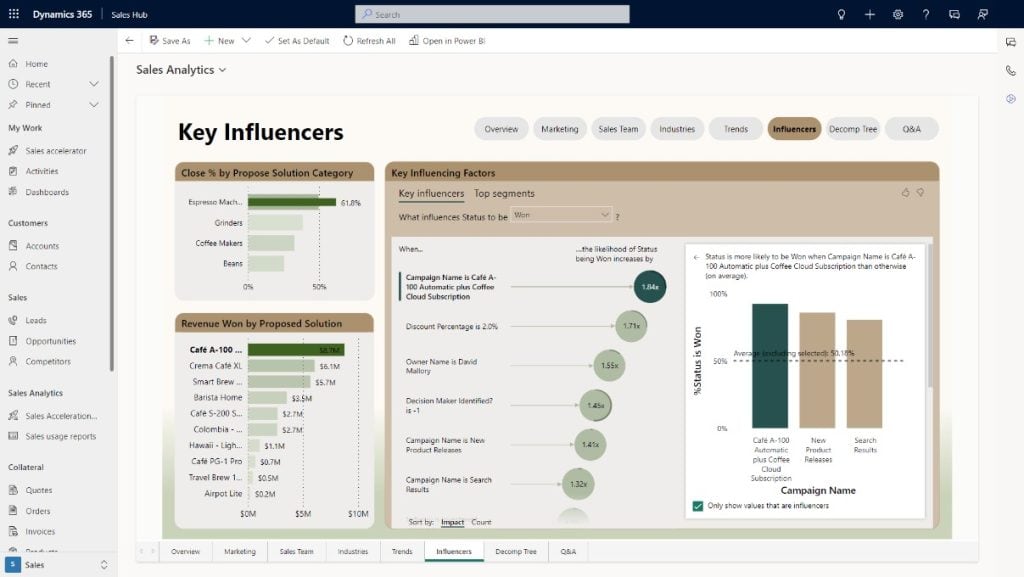
Sales and revenue growth
- Improved pipeline visibility and forecasting
- Better lead tracking and conversion rates
- Stronger account management
Finance and operations
- Automated financial processes
- Real-time cash flow visibility
- Simplified compliance and reporting
Customer service
- Faster response times
- Centralised case management
- More personalised customer interactions
Security, Compliance, And UK Considerations
Data security is a board-level concern for SMEs, particularly as regulatory requirements increase.
Dynamics 365 is built on Microsoft’s global cloud infrastructure, with enterprise-grade security embedded as standard. This includes:
- Data encryption at rest and in transit
- Role-based access controls
- Compliance with UK and international standards
For SMEs, this removes the burden of managing security internally while ensuring systems remain aligned with regulatory expectations.
Commercial Impact: Moving Beyond IT Investment
Adopting Dynamics 365 is not simply a technology upgrade—it is a business transformation initiative.
For SMEs, the measurable outcomes typically include:
- Reduced operational costs through automation
- Increased revenue through improved sales processes
- Better decision-making through real-time insights
- Enhanced customer experience leading to retention and growth
The key is alignment. The platform must be configured around business objectives, not just technical capability.
Why The Right Dynamics 365 Partner Matters
The success of any Dynamics 365 implementation depends heavily on how it is deployed.
An experienced partner will:
- Map the system to your business processes
- Ensure data is structured correctly from the outset
- Provide training to drive user adoption
- Offer ongoing optimisation as your business evolves
For SMEs, this reduces risk and accelerates return on investment. A poorly implemented system can create friction; a well-implemented one becomes a competitive advantage.
Microsoft Dynamics 365: A Strategic Platform For SME Growth
Dynamics 365 is increasingly viewed as the foundation of a modern digital business.
It enables SMEs to:
- Replace fragmented legacy systems
- Create a connected operational model
- Scale without constant system replacement
- Respond quickly to market changes
For organisations focused on sustainable growth, operational efficiency, and data-driven strategy, it provides a clear and proven pathway forward.
Akita is a leading UK Dynamics 365 partner. To discuss a Microsoft CRM or ERP adoption, please get in touch:
Contact Us