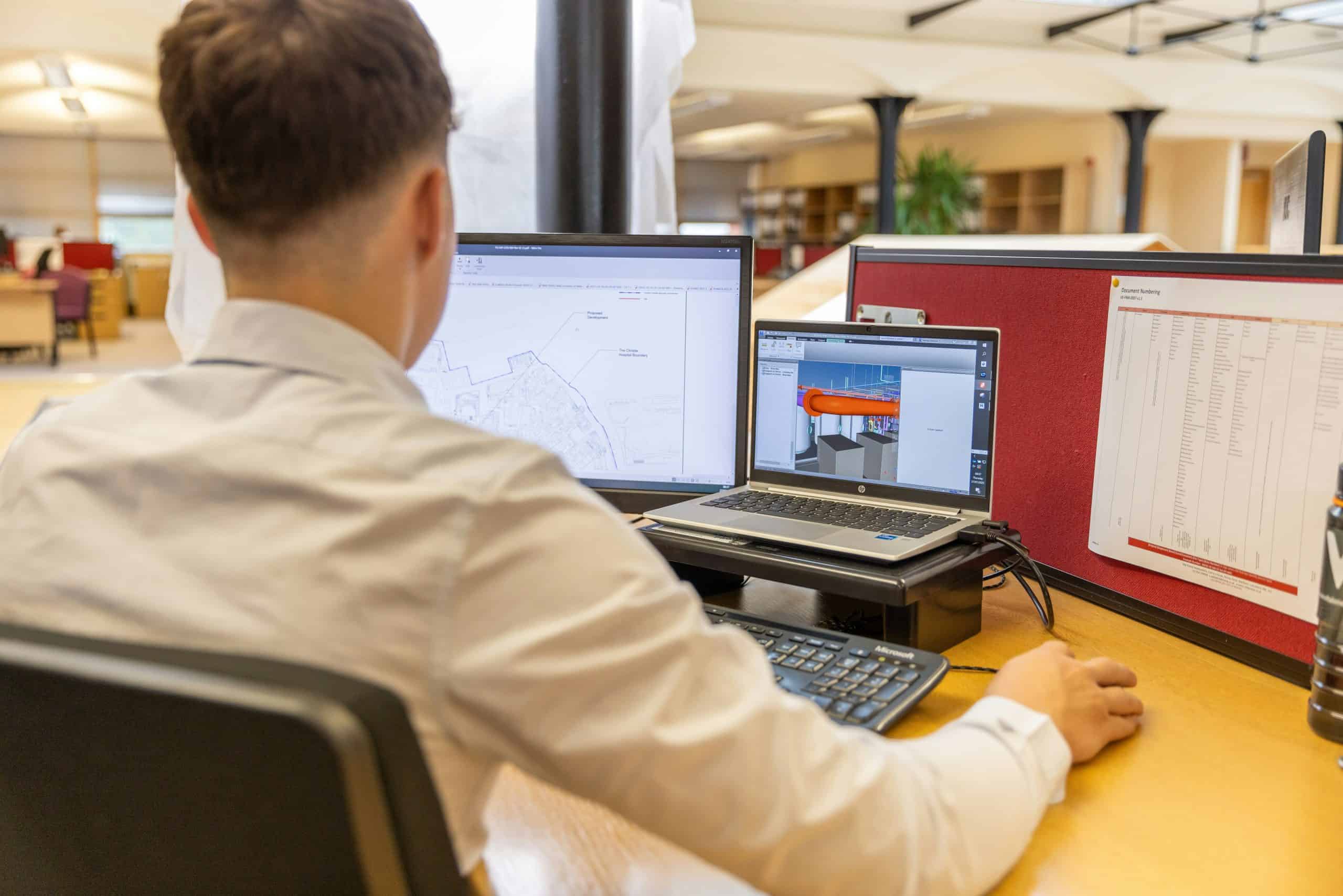
Architecture is an industry built on accuracy, innovation and the seamless flow of information. Yet many practices still battle ageing IT infrastructure, sluggish design systems and fragmented workflows that drain productivity.
Firms looking to win larger tenders, accelerate delivery and strengthen client confidence need a modern technology foundation that aligns with the realities of architectural work.
Strategic IT support for architects is no longer a background function: it’s a growth catalyst. When your technology, processes and support model reflect how architects collaborate and deliver, you unlock efficiency, protect margins and improve design output across the practice.
The Technology Challenges Facing Modern Architects
Architecture is a highly digital profession. Architects regularly work with large, complex files generated by applications such as AutoCAD, Revit, SketchUp, and Autodesk Construction Cloud. These files need to be accessed quickly, shared securely, and updated accurately across multiple teams and locations.
At the same time, architectural practices are increasingly expected to support hybrid working, collaborate with contractors and clients in real time, and meet growing cyber security requirements.
These demands create several common challenges:
- Slow performance when working with large BIM and CAD files
- Difficulties sharing project information across teams
- Remote access requirements for site visits and hybrid working
- Cyber security risks affecting client and project data
- Complex software licensing and application management
- Limited visibility of project and business information
- Business continuity concerns if systems fail
Without the right technology foundation, these issues can impact project delivery, profitability, and client satisfaction.
Downtime Can Delay Entire Projects
Construction and design projects often operate to strict deadlines. A technology outage doesn’t just affect one individual. It can prevent architects from accessing drawings, collaborating with contractors, issuing revisions, or attending critical meetings.
Specialist IT support for architects focuses on preventing these disruptions before they occur.
Rather than simply responding to issues, proactive monitoring helps identify potential problems early. Software updates, security patches, storage management, and infrastructure monitoring all contribute to improved reliability and reduced downtime.
This proactive approach helps ensure architects can focus on delivering projects rather than troubleshooting technology problems.
Supporting CAD, BIM and Design Applications
One of the biggest differences between general IT support and specialist IT support for architects is understanding the software environment.
Applications such as Revit, AutoCAD and other BIM platforms place significant demands on networks, storage, workstations, and cloud infrastructure. Poorly configured systems can lead to sluggish performance, lengthy file loading times, and collaboration issues.
A specialist provider understands:
- Hardware requirements for design workloads
- Storage solutions for large project files
- Optimising performance for BIM environments
- Autodesk licensing and application management
- Cloud collaboration platforms for project teams
This expertise helps architectural firms maximise productivity and reduce frustrations caused by slow or unreliable systems.
Improving Collaboration Across Projects
Architectural practices rarely work in isolation. Successful project delivery depends on collaboration between architects, engineers, contractors, consultants, and clients.
Modern collaboration tools make this possible, but only when implemented correctly.
Cloud platforms such as Microsoft 365, SharePoint, Teams, and Azure allow users to securely access files and collaborate from virtually anywhere. When integrated effectively, these tools help ensure everyone is working from the latest documentation and project information.
Specialist IT support helps architects create a connected digital workplace where communication flows more effectively across projects, offices, and construction sites.
Protecting Valuable Intellectual Property
Architectural drawings, designs, specifications, and BIM models represent valuable intellectual property. Losing access to this information or suffering a cyber attack can have serious financial and reputational consequences.
Unfortunately, architecture firms are increasingly targeted by cyber criminals because of the valuable information they hold.
Specialist IT support for architects typically includes:
- Advanced endpoint protection
- Multi-factor authentication
- Secure cloud backups
- Email security and filtering
- Disaster recovery planning
- Cyber security assessments
- Security awareness training
These measures help protect project information while ensuring architects can continue working even if a cyber incident occurs.
Why Architecture Firms Need a Different Class of IT Support
Architectural work demands high performance, stable collaboration, robust compliance and strong cyber resilience. These requirements separate the architecture sector from standard office environments and place very specific demands on IT infrastructure.
Architects work with intensive CAD, BIM and 3D visualisation applications that require powerful processing capability and fast access to large models. Any slowdown creates operational friction, delays approvals and frustrates design teams.
At the same time, models must be consistently accessible across dispersed teams, external consultants and planning bodies. Smooth collaboration hinges on reliable communication tools, organised data structures and consistent software versions.
Alongside this is a growing regulatory burden on data governance, file management and privacy. Planning processes, contractor agreements and client confidentiality all require detailed audit trails and stringent access control.
These realities mean architectural practices need a support partner that understands the design cycle end-to-end and can optimise the technology that underpins it.
The Value Of Tailored IT Support For Architects
A specialist IT partner can transform workflows by aligning performance, collaboration and governance.
This includes tuning infrastructure for design applications, standardising tools across teams and ensuring robust cyber protection without slowing creativity or delivery.
Building a High-Performance, Collaborative Design Environment
Growth in architecture comes from consistent delivery, predictable workflows and the ability to take on larger, more complex projects. This is only possible when the technology environment supports clear communication, responsive systems and strong project governance.
Modernising the hardware estate is central to this. Architect workstations must match the intensity of BIM and visualisation workloads, with dedicated graphics capability, fast local storage and structured refresh cycles that keep performance reliable. Complementing this with cloud-ready infrastructure allows firms to scale capacity on demand, with design environments accessible securely from studio or remote locations.
Standardising software across the practice ensures accurate model sharing, reduces version conflicts and strengthens coordination between project teams and external partners. Integrated communication tools — such as cloud-based whiteboarding, meeting platforms and structured shared workspaces — streamline internal reviews and support quicker client decision-making.
Data management also plays a decisive role in creating predictable workflows. Centralised storage, whether cloud-hosted or high-performance onsite infrastructure, ensures fast access to models and prevents file duplication.
Automated backup and restoration processes protect against accidental deletion or file corruption — a critical safeguard when working to tight planning timelines. With structured permission control and detailed version histories, firms gain reliable project governance and clearer oversight of who has accessed or modified project files.
Strengthening Security Across the Practice
Architectural firms are high-value cyber targets. They hold sensitive planning information, detailed property data, commercial models and intellectual property that can be exploited by cyber criminals. Strong security is therefore a commercial necessity rather than a technical formality.
Advanced threat detection and response systems monitor the environment in real time, identifying suspect activity quickly and isolating compromised endpoints before they disrupt delivery. Secure remote access frameworks support hybrid working without exposing design systems to unnecessary risk.
Network segmentation further reduces exposure by separating critical design environments from general office systems.
Human error remains one of the most common causes of breach. Regular cyber awareness training equips architects, technicians and project teams with confidence to spot phishing attempts, risky links and unsafe file-sharing practices. This cultivates a security-conscious culture that supports the wider cyber strategy.
Developing A Scalable IT Strategy For Long-Term Growth
The future of architecture is increasingly digital, shaped by AI-assisted modelling, VR/AR visualisation, digital twins, reality capture and automation across the design cycle. Growing firms need an IT strategy that anticipates these developments rather than reacts to them.
Strategic capacity planning ensures your infrastructure can keep pace with expanding project loads and evolving design tools. Lifecycle budgeting provides predictability and eliminates the last-minute hardware purchases that disrupt cashflow. A structured technology roadmap aligns investment with business objectives, positioning the firm favourably for larger tenders and complex design briefs.
Licence rationalisation and vendor management remove duplication, optimise spend and ensure teams have access to the tools they need without unnecessary overhead. This is particularly valuable for practices with mixed design environments or distributed teams working across multiple software suites.
Turning Technical Strength into Competitive Advantage
When your IT environment becomes a strategic enabler, the entire business benefits. Faster delivery cycles improve utilisation and enhance project profitability. Stronger security safeguards reputation and protects commercial value.
Reliable communication supports better client relationships and reduces unnecessary revisions. High-performing design systems enhance staff satisfaction and help attract top-tier talent.
Perhaps most importantly, scalable technology gives architectural practices the confidence to pursue larger opportunities. Whether expanding BIM capability, adopting new visualisation tools or integrating with contractor systems, firms can grow without being constrained by outdated infrastructure.
A future-proof technical environment allows architects to focus on what they do best: designing exceptional spaces. With the right IT partner, your practice gains the agility, resilience and capacity needed to thrive in a competitive, evolving market.
Explore how Akita’s dedicated IT support for architects helps practices deliver faster, work more securely and operate with confidence:
Contact Us