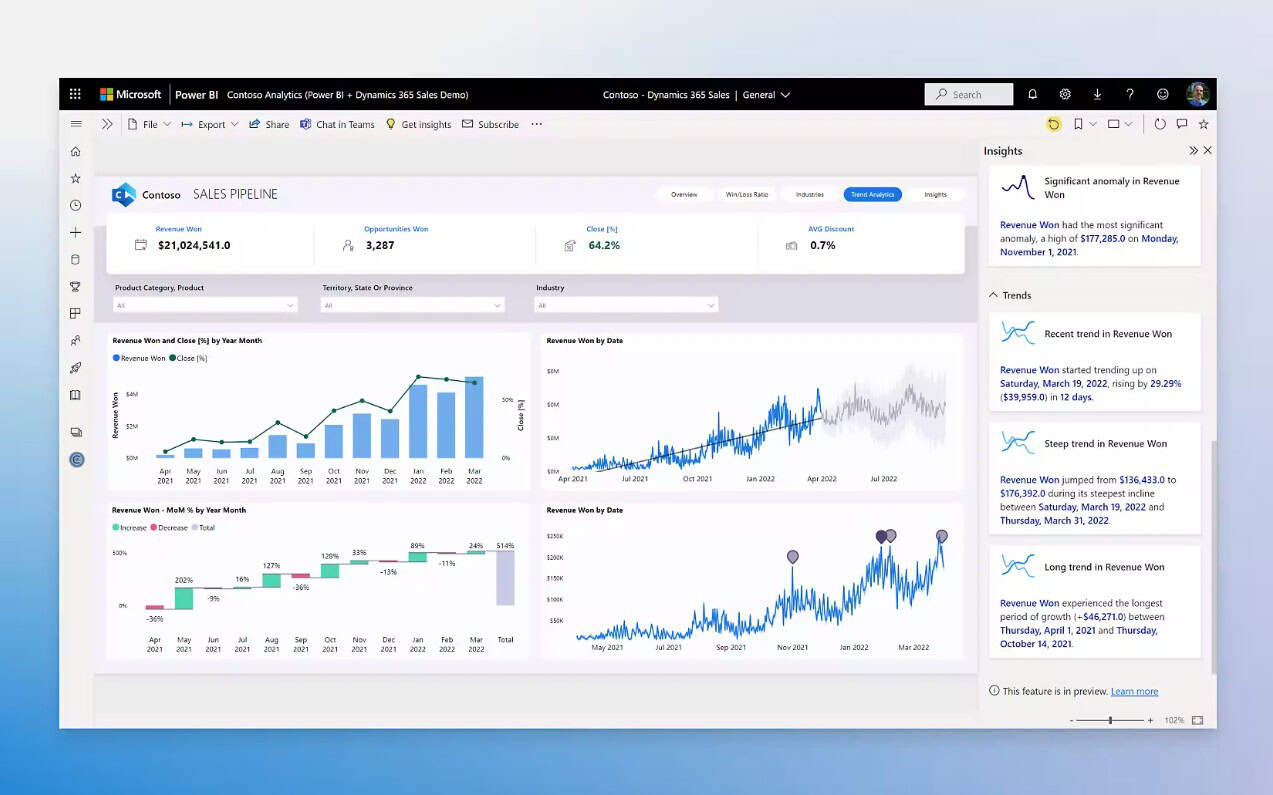
For many organisations, CRM and ERP projects are treated as separate initiatives. One provider manages infrastructure and support. Another implements business applications. A third may oversee security or compliance.
On paper, that division can look sensible. In reality, it often creates friction, confusion and diluted accountability.
There is a strong argument that your IT partner should also be capable of developing and delivering CRM and ERP. Not as an add-on service, but as a natural extension of its strategic role within your organisation.
When the same team understands your infrastructure, security posture and operational pressures, CRM and ERP systems stop being isolated systems and start becoming true business enablers.
End-To-End Ownership Of The Technology Estate
An IT partner already responsible for infrastructure, cloud, cyber security and user support has a comprehensive view of your technology environment. It understands how systems connect, where vulnerabilities sit and how data moves across departments. That perspective is invaluable when implementing CRM and ERP platforms.
Rather than designing a solution in isolation, it can align the application layer with your network architecture, identity management, backup strategy and disaster recovery planning. Performance, resilience and scalability are considered from the outset. There is no disconnect between the people who manage your servers and those configuring your finance module.
This end-to-end ownership also strengthens accountability. When reporting data flows from front-line CRM activity into board-level financial dashboards, there is clarity about who is responsible. You avoid the familiar scenario where infrastructure issues are blamed on the application partner, and application challenges are redirected back to IT support.
Deeper Understanding Of Operational Processes
A managed services IT provider does not operate at arm’s length. It works alongside operations, finance teams and senior leadership on a daily basis. It sees where workflows stall, where manual processes persist and where compliance concerns are growing.
That operational visibility is essential when shaping ERP modules or configuring CRM pipelines. Software should reflect how your organisation actually works, not how a vendor assumes it works. An IT partner embedded in your environment can design solutions around genuine bottlenecks and growth ambitions.
For example, if finance teams are struggling with fragmented reporting or duplicated data entry, an ERP implementation can be structured to remove those inefficiencies rather than simply digitise them. If sales leadership lacks visibility into pipeline forecasting, CRM can be tailored to provide meaningful, decision-ready insights. The result is a system grounded in reality rather than theory.
Security And Compliance Embedded By Design
CRM and ERP systems contain some of your most sensitive information: financial records, commercial contracts, customer data and operational intelligence. Security cannot be an afterthought.
An IT partner with strong cyber security capability can build governance, role-based access controls and monitoring frameworks directly into the system architecture. Data classification, audit trails and compliance requirements are considered from day one. That approach is far more effective than retrofitting controls once the platform is live.
Embedding security at design stage also reduces organisational risk. Access permissions align with job roles. Integration points are assessed for vulnerability. Backup and recovery processes are tested against real-world threat scenarios. In a regulatory environment that demands demonstrable control, this integrated approach provides assurance to both leadership and external stakeholders.
A Single Point Of Strategic Accountability
Business leaders are understandably wary of complex technology projects with blurred ownership. Multiple vendors can mean multiple interpretations of success and, when challenges arise, multiple excuses.
When the same organisation delivers managed IT services, IT support, CRM and ERP, accountability becomes clear. Escalation paths are straightforward. Performance metrics are aligned. There is no ambiguity about who is responsible for outcomes.
This clarity is particularly valuable during periods of change. Whether you are entering new markets, acquiring another organisation or responding to regulatory shifts, technology must adapt quickly. A single strategic partner can assess infrastructure, security and business applications holistically, ensuring coordinated and timely response.
Improved User Adoption And Change Management
Technology projects do not fail because of software. They fail because of people. User adoption, digital maturity and cultural readiness play a decisive role in CRM and ERP success.
An IT support team that interacts daily with users has a nuanced understanding of how comfortable different departments are with change. It knows where training is required, where resistance may surface and where processes need simplification rather than automation.
That familiarity enables more effective onboarding, targeted training and realistic change management planning. Rather than imposing a rigid rollout model, your IT partner can tailor communication and support to reflect how your teams actually operate. Adoption improves because the solution feels relevant and supported, not imposed.
CRM And ERP Systems That Align With Your Long-Term IT Strategy
CRM and ERP platforms are not isolated tools. They form the backbone of digital transformation. Decisions made during implementation will shape reporting capability, data governance and scalability for years to come.
An IT partner already involved in roadmap planning and cloud strategy can ensure that CRM and ERP decisions support broader objectives. That includes aligning with cyber security frameworks, integration standards and future growth plans.
If your organisation intends to scale, diversify services or enhance data analytics capability, those ambitions should influence how CRM and ERP systems are configured today. A strategically engaged IT partner can map application design to five-year objectives rather than short-term functional requirements.
Ultimately, CRM and ERP should not sit outside your core IT strategy. They should sit at its centre, fully integrated with infrastructure, security and governance.
When managed services and business applications converge under one capable provider, organisations gain coherence. Systems communicate effectively. Risk is reduced. And investment delivers measurable return.
Akita is a leading developer of Microsoft CRM and ERP systems. For more information please get in touch:
Contact Us