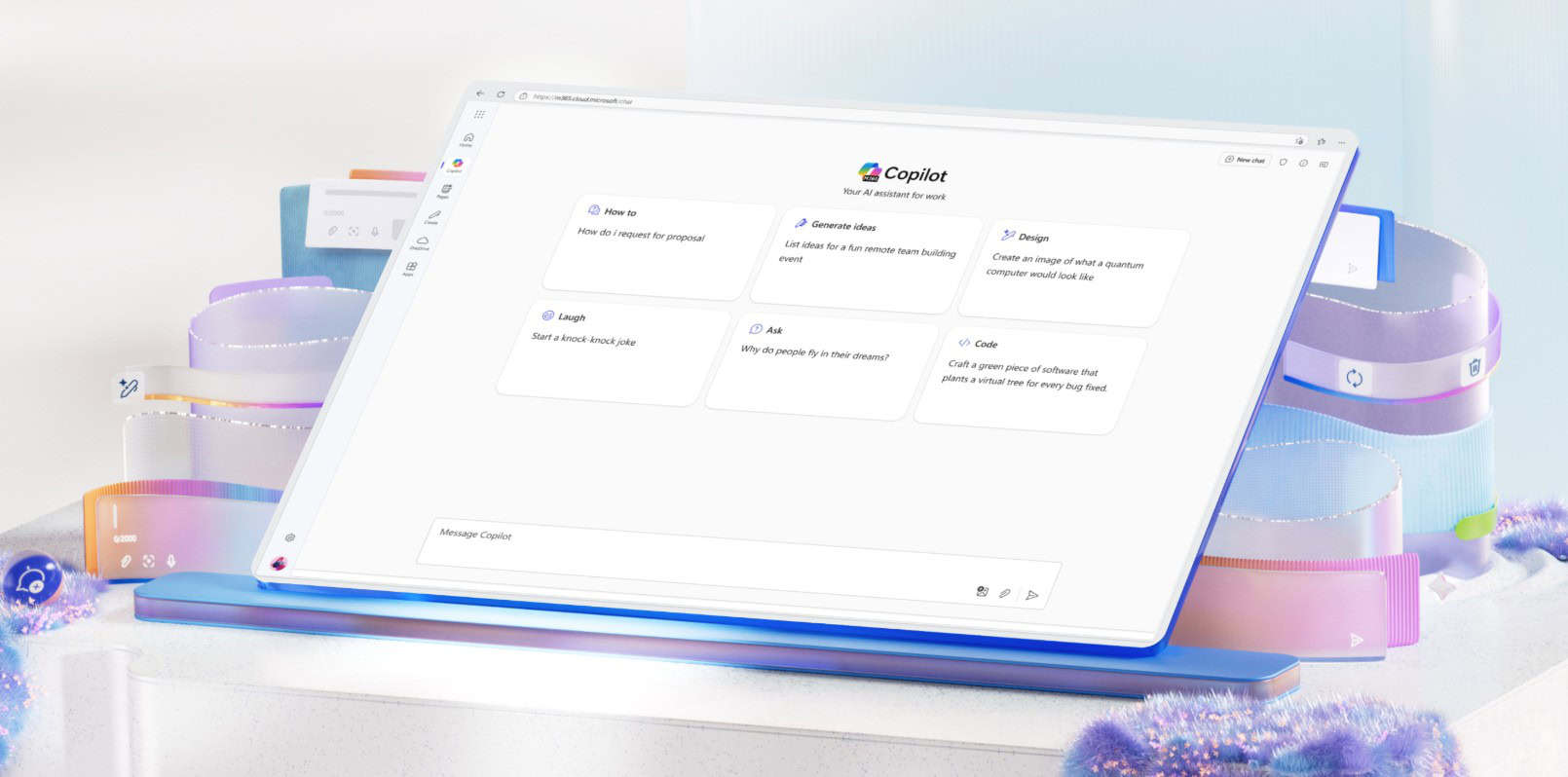
Artificial intelligence is no longer a curiosity; it’s a budget line, a talking point in board meetings, a competitive differentiator – and a pressure point if organisations haven’t got their strategy in place.
The direction for such organisations isn’t necessarily clear. The AI market today bears remarkable similarity to the early .com bubble: crowded, noisy, and driven by bold claims and promises rather than proven ROI and sustainable value.
In this landscape, Microsoft Copilot adoption as an organisation’s primary AI solution stands out as a measured, strategic decision rather than a speculative bet. Below, we explore why.
The AI Industry: A Modern-Day Wild West
The current AI market is a digital gold rush. New vendors appear weekly. Point solutions promise automation miracles. Generative tools offer productivity leaps with little clarity on governance, compliance or long-term viability.
Much like the .com era, we’re seeing inflated expectations, unclear business cases, and limited accountability.
Many AI tools operate outside enterprise-grade security frameworks. Data is uploaded into opaque models. Controls are inconsistent. Commercial longevity is uncertain.
For medium and large-sized organisations – particularly those in regulated sectors or the public sector – this is not just a technical risk. It is a governance issue.
Copilot adoption offers a fundamentally different path. Rather than layering an untested AI platform on top of your environment, it embeds intelligence directly within your existing Microsoft 365 ecosystem. It is evolutionary, not experimental.
Security By Design, Not As An Afterthought
Security is the defining differentiator.
Microsoft Copilot operates within your Microsoft 365 tenant. It respects your existing permissions, identity management and data governance policies. If a user cannot access a file in SharePoint, Copilot cannot access it on their behalf.
This alignment with Microsoft’s security architecture means:
- Data remains within your tenant boundary
- Access is governed by Azure Active Directory policies
- Information protection and compliance controls remain intact
- Audit logs and monitoring are preserved
In contrast to standalone AI tools, which often require data to be exported or shared externally, Copilot adoption reinforces your existing security posture rather than undermining it.
For organisations already invested in Microsoft security tooling, this continuity is strategically important. It reduces risk, simplifies governance and provides clarity for compliance teams.
Enhancing The Applications You Already Use
One of the most compelling reasons for business Copilot adoption is that it enhances so much of what exists already. For organisations already using Microsoft 365, a Copilot solution exists for practically every application that your teams use every day.
There’s no steep learning curve, no disruptive platform/file format shift, and no wholesale retraining exercise.
In Outlook, Copilot can draft responses, summarise long email threads and prioritise action points. This is not simply convenience; it reduces cognitive load and accelerates decision-making.
In Teams, Copilot can generate meeting summaries, highlight key decisions and create task lists from discussions. For leadership teams managing multiple workstreams, this ensures alignment without relying on manual note-taking.
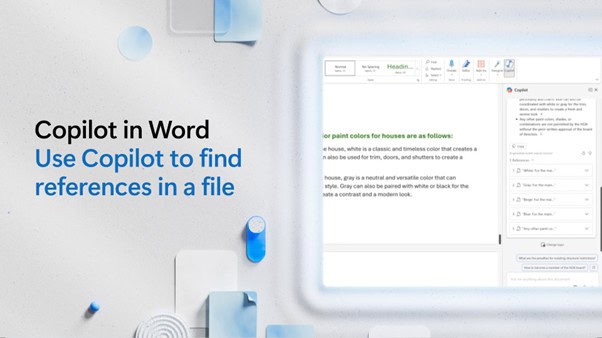
In Word, Copilot can draft proposals, reports and policy documents based on structured prompts. It supports iteration, refinement and clarity, enabling subject matter experts to focus on insight rather than formatting.
In Excel, it can analyse data trends, generate formulas and surface insights that might otherwise require specialist skills. This democratises data analysis across departments.
This is perhaps where Copilot adoption becomes commercially compelling. It does not introduce a parallel AI workflow. It enhances productivity within established processes. The return on investment is tied directly to measurable efficiency gains across familiar tools.
Integration Over Fragmentation
Organisations already face technology sprawl. Introducing another standalone AI platform often adds complexity rather than clarity.
And it’s rarely one AI platform: few AI solutions are currently mature enough to span more than a few features. This means that an organisation might, in fact, take on half a dozen new features per job role, resulting in a dizzying and expensive number of platforms.
Copilot adoption avoids fragmentation by integrating with Microsoft 365, Dynamics 365 and the broader Microsoft ecosystem.
For businesses that rely on SharePoint for document management, Teams for collaboration and Outlook for communication, this creates a unified intelligence layer across the digital workplace.
From a strategic perspective, this alignment supports:
- Simplified vendor management
- Reduced integration overhead
- Consistent user experience
- Centralised security governance
Rather than managing multiple AI contracts, APIs and compliance reviews, organisations can consolidate AI strategy within an existing enterprise agreement framework.
Commercial Stability In A Volatile Market
Picking where a business should invest in AI is also not for the faint-hearted. Today’s hyped solution is soon surpassed by something better. Prices fluctuate wildly. And quality dips with growth.
Inevitably, the AI market will consolidate. Not every provider will survive. Many point solutions will be acquired, cloned, pivot, or disappear altogether.
Microsoft’s long-term investment in AI infrastructure, cloud capability and enterprise services provides a degree of stability that smaller vendors cannot match.
Copilot adoption, therefore, is not a speculative trial with an emerging start-up. It is an extension of an established, globally supported platform.
For CFOs and CIOs, this matters. AI investment must be sustainable, supportable and strategically aligned with long-term digital transformation plans.
Driving Controlled Innovation
Copilot adoption also enables controlled innovation. It allows organisations to experiment, refine use cases and scale AI capability within a secure and governed framework.
Rather than employees independently adopting consumer-grade AI tools, IT leaders can provide an approved, secure solution. This reduces shadow IT, mitigates data leakage risk and ensures that innovation remains aligned with corporate policy.
In practical terms, this means:
- Clear AI governance policies
- Defined user training and adoption plans
- Measurable productivity benchmarks
- Controlled rollout across departments
AI becomes a managed capability, not a decentralised experiment.
From Hype To Practical Value
The question is not whether AI will transform business operations. It already has.
The question is how to adopt it responsibly, strategically and cost-effectively.
Microsoft Copilot adoption as an organisations primary AI tool represents a disciplined approach. It prioritises security, enhances existing workflows and aligns with enterprise-grade governance.
In a market characterised by hype and volatility, it offers clarity and continuity.
For organisations seeking to harness AI without compromising compliance, data integrity or operational stability, embedding intelligence within the Microsoft ecosystem is not just convenient. It is commercially prudent.
To discuss Microsoft Copilot adoption and use within your organisation, please get in touch:
Contact Us